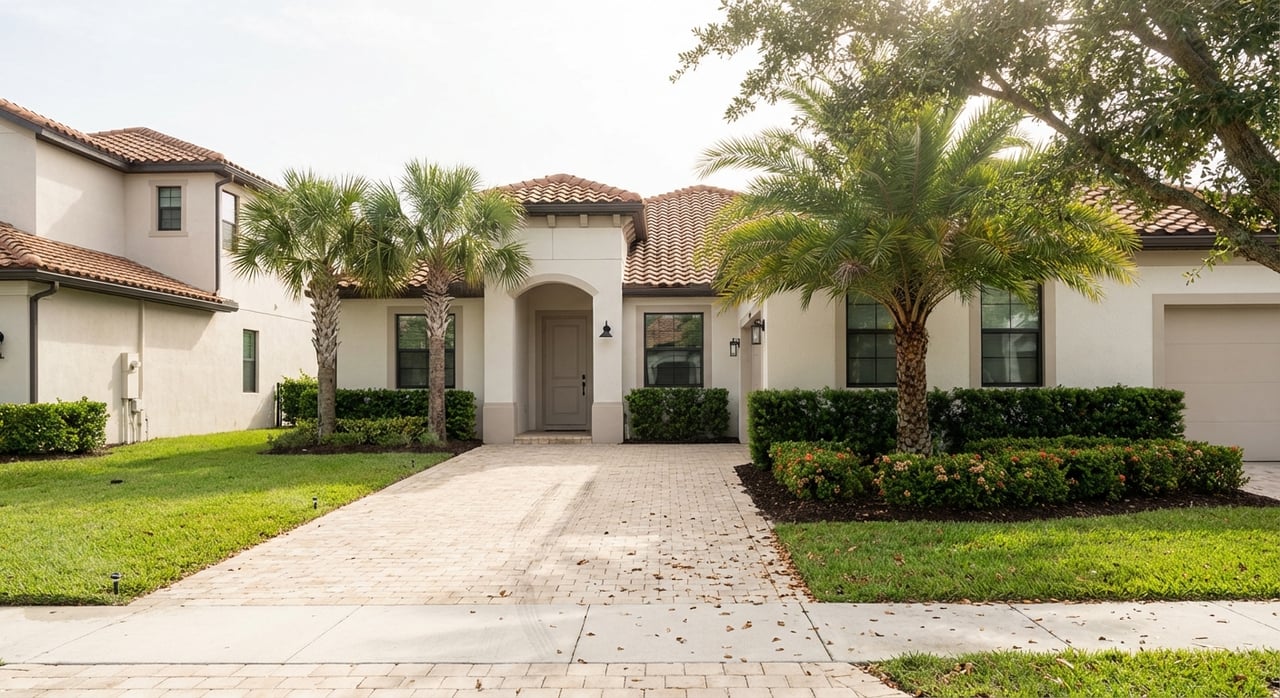
Thinking about a new-build home in Davenport but not sure how CDD and HOA fees will affect your budget? You are not alone. These charges can change your monthly payment, your loan approval, and even your resale math. In this guide, you will learn what each fee covers, where to find accurate numbers in Polk County, and the smart questions to ask before you sign. Let’s dive in.
CDD vs HOA: What they are
What is a CDD?
A Community Development District, or CDD, is a special-purpose local government formed under Florida law (Chapter 190). It finances, builds, and maintains shared infrastructure such as roads, water and sewer systems, stormwater, parks, and amenity centers. CDDs often issue bonds to fund these projects, then collect annual non-ad valorem assessments from properties in the district to repay the bonds and cover operating and maintenance costs.
What is an HOA?
A homeowners’ association is a private nonprofit corporation created by the developer and governed by recorded covenants, conditions, and restrictions. In Florida, HOAs are regulated by Chapter 720. Dues fund routine maintenance, common-area services, amenities, insurance, management, and reserves. HOAs can also levy special assessments for capital projects or shortfalls as allowed by the governing documents.
Key differences at a glance
- CDDs are public special districts. HOAs are private associations.
- CDD assessments commonly appear on your Polk County property tax bill as non-ad valorem assessments. HOA dues are billed by the association or its management company.
- CDD money often repays long-term infrastructure bonds and covers district operations. HOA dues fund day-to-day community upkeep and amenity maintenance.
How fees are billed in Davenport
CDD assessments
- Two parts are common: a debt service portion that repays bonds and an operating and maintenance portion that funds annual services.
- Debt service is usually fixed by the bond schedule. O&M can change each year based on the adopted budget.
- In Polk County, CDD assessments typically show on the annual tax bill as non-ad valorem charges that become a lien if unpaid.
HOA dues
- The HOA board adopts an annual budget that sets dues. Dues can be monthly, quarterly, or annual.
- HOAs maintain common areas, handle management and insurance, and fund reserves. Special assessments may be charged for large projects or unexpected costs.
Many Davenport communities have both
Newer master-planned neighborhoods in Davenport often include both a CDD and an HOA. You will want to confirm both obligations for the specific property you are considering.
What do they cost? Realistic ranges
Actual amounts vary by community and can change over time. In Florida developments, annual CDD assessments often translate to about 50 to 300 or more dollars per month. HOA dues vary widely based on amenities, roughly 50 to 400 or more dollars per month. In many newer Central Florida communities, combined monthly CDD plus HOA costs often fall somewhere between 150 and 700 dollars. Always verify the exact amounts for a Davenport property using Polk County records and the community’s current budgets.
Quick examples to frame a budget
These simple scenarios are illustrative only. Check the property’s tax bill, the CDD budget, and the HOA’s current budget for precise numbers.
- Value-focused community: CDD 60 to 110 dollars per month + HOA 50 to 90 dollars per month = about 110 to 200 dollars combined.
- Typical amenity mix: CDD 120 to 220 dollars per month + HOA 75 to 150 dollars per month = about 195 to 370 dollars combined.
- Amenity-rich community: CDD 180 to 300 dollars per month + HOA 200 to 350 dollars per month = about 380 to 650 dollars combined.
How fees affect financing and closing
Mortgage qualification
Lenders typically include mandatory HOA dues and CDD assessments when they calculate your housing payment and debt-to-income ratio. A higher assessment can reduce the loan amount you qualify for compared to a similar home without that obligation.
Appraisal and marketability
Appraisers consider recurring assessments that affect monthly carrying cost. Very high combined fees can influence marketability and value compared to similar homes without them.
Disclosures and title
CDD assessments should appear in seller or builder disclosures and show on preliminary title work. During due diligence, request the CDD adopted budget, assessment roll, and bond documents, along with the HOA’s CC&Rs, budget, reserves information, and an estoppel letter.
At closing
Depending on timing, CDD assessments may be prorated if billed directly, or you may receive the first tax bill after closing. Your lender may require documentation of any known special assessments and could require reserves or payment at closing depending on the program.
How to verify fees in Polk County
Use official sources to confirm exact amounts for a specific Davenport property:
- Polk County Property Appraiser: Look up the parcel to see non-ad valorem assessments and the current year tax bill, which typically reflects CDD charges.
- Polk County Tax Collector: Review how the tax bill is collected and when payments are due.
- Polk County Clerk/Records: Find recorded community documents, including CDD creation documents and HOA covenants.
- Florida Department of Economic Opportunity Special Districts Directory: Confirm the CDD’s contact information and review district profiles.
- CDD’s official website or management company: Access adopted budgets, assessment rolls, meeting minutes, and bond information.
- HOA management company: Request current dues, budgets, reserve information, rules, and any special assessment history.
Buyer checklist: documents to request
Gather these items during your inspection and contract due diligence period:
- Current property tax bill showing non-ad valorem assessments
- CDD adopted budget, assessment roll, and bond amortization schedule (Engineer’s Report or Official Statement)
- HOA estoppel certificate with current dues, account status, transfer fees, and any pending assessments
- HOA CC&Rs, bylaws, rules, budget, financial statements, and any reserve study
- Recent meeting minutes and audits for both the CDD and HOA
Smart questions to ask before you buy
- Is this property inside a CDD? What is the current annual assessment, and how is it billed?
- How is the CDD assessment split between debt service and operating and maintenance?
- Are assessments fixed, scheduled to change, or likely to shift due to new bonds or projects?
- What exactly do CDD and HOA funds cover in this community?
- What are the HOA dues and frequency, and what are the current reserve balances?
- Has the HOA levied special assessments recently, or are any planned?
- Who manages the CDD and HOA, and when does or did resident control begin?
- Are there any rental or use restrictions that could affect your plans?
Red flags and how to protect yourself
Red flags to investigate
- Large per-unit CDD debt relative to completed homes
- Recent or frequent HOA special assessments
- Low or no HOA reserves paired with visible deferred maintenance
- Announced changes to CDD O&M that suggest budget stress
- Litigation involving the CDD or HOA
- Ongoing developer control without a clear turnover timeline
- High HOA delinquency rates
Mitigation steps
- Review the CDD Official Statement and Engineer’s Report to understand total bond obligations and assessment structure.
- Examine HOA reserve studies, budgets, and recent financials.
- Confirm with your lender how assessments will be treated for qualification and whether additional reserves are required.
- Negotiate contract contingencies that give you time to review all CDD and HOA documents and estoppels.
- If affordability is tight, compare similar Davenport or Polk County communities with different CDD and HOA combinations.
CDD vs HOA: quick comparison
- Purpose: CDD funds infrastructure and district operations. HOA funds day-to-day community maintenance and amenities.
- Billing: CDD shows on your property tax bill as non-ad valorem. HOA is billed by the association or its manager.
- Changes: CDD O&M can change annually, while bond repayment follows a schedule. HOA dues are budget-driven and can include special assessments.
Make a confident choice in Davenport
Understanding CDD and HOA fees helps you budget accurately and avoid surprises later. When you verify amounts with Polk County records and review community documents, you can compare homes on a true apples-to-apples basis. If you want help reading budgets, spotting red flags, and weighing total monthly costs, you have a trusted local resource.
If you are exploring new construction or resale options in Davenport and across Polk County, connect with Paula Shields for local guidance, clear answers, and a plan tailored to your budget. Schedule your free consultation.
FAQs
What is a CDD in Florida real estate?
- A CDD is a special-purpose local government that finances, builds, and maintains shared infrastructure, then collects non-ad valorem assessments to repay bonds and fund operations.
Do Davenport homes usually have both CDD and HOA fees?
- Many newer master-planned communities in Davenport include both, but you should verify the exact obligations for a specific property using Polk County records and community documents.
Where will I see CDD charges for a Davenport home?
- CDD assessments commonly appear on the Polk County property tax bill as non-ad valorem charges that become a lien if unpaid.
Can CDD or HOA fees increase over time?
- Yes. CDD operating and maintenance assessments can change with the annual budget, and HOAs can adjust dues or levy special assessments as allowed by their documents.
How do CDD and HOA fees affect my mortgage approval?
- Lenders typically include mandatory CDD and HOA amounts in your housing payment and debt-to-income ratio, which can reduce the loan size you qualify for.
What documents should I review before buying in a CDD/HOA community?
- Request the property tax bill, the CDD adopted budget and assessment roll, bond documents, the HOA estoppel, CC&Rs, current budget, reserves information, financials, and recent meeting minutes.