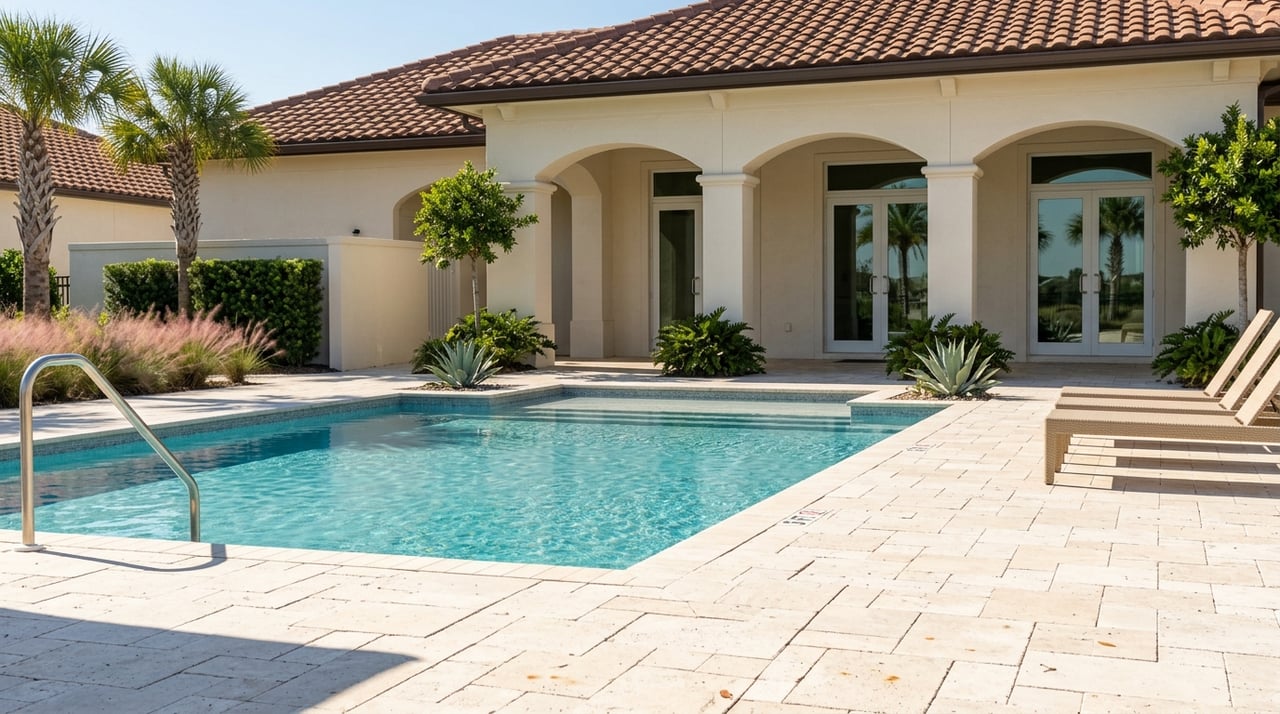
If you have started touring homes in Davenport, you have probably noticed something quickly: two communities can look similar online but feel very different in real life. With Davenport growing fast, your neighborhood choice affects far more than the house itself. When you know how to compare amenities, fees, access, and day-to-day convenience, you can make a more confident decision. Let’s dive in.
Why Davenport community comparisons matter
Davenport is changing quickly. According to Census QuickFacts, the city’s estimated population reached 16,764 in July 2024, up 79.4% from the 2020 census count of 9,043.
That kind of growth can create more choices, but it can also make your decision harder. A home that looks like a great fit on paper may come with a very different commute, fee structure, or neighborhood layout than you expected.
Polk County also sits along the I-4 corridor between the Orlando and Tampa metro areas. As northern Polk continues to urbanize, location inside Davenport matters more than many buyers first assume.
Start with your daily routine
Before you compare pools, clubhouses, or home styles, think about how you actually live. The best community for you is the one that supports your weekly routine, not just your wish list.
Ask yourself a few practical questions first:
- How often will you commute toward I-4 or other major roads?
- Do you want spaces you can use on foot?
- Will you regularly use a gym, playground, or walking path?
- Do you want quick access to groceries, medical services, or other everyday stops?
- Are you comfortable with neighborhood rules that may affect parking, pets, or exterior changes?
When you begin with lifestyle instead of marketing photos, it becomes easier to narrow your options.
Compare Davenport access and commute patterns
In a fast-growing area, road access can shape your day as much as the home itself. FDOT’s I-4 exit chart identifies US 27 at exit 55, and major corridor access can make one Davenport community feel much more connected than another.
This matters if you commute across Polk County or toward larger metro job centers. Even if two homes are priced similarly, one may offer a smoother drive based on how close it is to your usual route.
Polk TPO notes that Polk County has more than 5,000 miles of roads, and its long-range transportation planning includes roads, bridges, transit, trails, and bike and pedestrian networks. That means transportation is an active part of how the area is evolving.
What to notice on a tour
When you visit a community, pay attention to more than the entrance sign. Look for signs of how easily you can move through the area on a normal weekday.
Some useful things to compare include:
- Distance to US 27 or major connecting roads
- Traffic flow at the neighborhood entrance
- Sidewalk continuity inside and outside the community
- Ease of getting to grocery stores and medical facilities
- Whether common errands require short drives or longer loops
Look beyond the amenity list
Amenities can be a real benefit, but only if they fit your life. A long list of features does not always mean better value.
The City of Davenport’s Tom Fellows Community Center is a good local benchmark for what an actively used amenity hub looks like. Opened in October 2021, it includes a fitness center, arts and crafts room, two full-size gymnasiums, a concession stand, and a banquet hall, and it hosts youth sports, events, and ongoing programs.
That is helpful because it shows the difference between an amenity that sounds good and one people actually use. When you compare neighborhoods, ask whether the community features are practical for your household or mainly attractive in photos.
Ask how useful the amenities really are
A smart comparison goes beyond “Does it have a pool?” and gets into how often you would realistically use what is there.
Questions worth asking include:
- Is there a pool, clubhouse, gym, playground, trail, or dog-friendly space?
- Are the amenities close enough to reach on foot?
- Are paths shaded, continuous, and lit?
- Are guest access and parking convenient?
- Do the amenity hours work with your schedule?
- Are these spaces visibly used and maintained?
If you would need to drive to an amenity every time, it may not feel as convenient as it first appears.
Walkability and trails deserve a closer look
In Davenport, sidewalks and trail access are not just bonus features. They can affect how connected and usable a community feels.
Polk County’s trail planning page says trails are the top community amenity sought by prospective homeowners. It also notes that Polk County has about 120 trails totaling nearly 400 miles.
The City of Davenport specifically points to Fort Fraser Trail as a nearby local gem that residents may want to enjoy, but it also notes that safe sidewalk connections may not always be in place. That makes walkability a practical issue, not just a lifestyle extra.
What to compare for walkability
When you tour a neighborhood, try to notice the full pedestrian experience.
Look for:
- Continuous sidewalks rather than broken segments
- Safe street crossings and clear visibility
- Shade along walking routes
- Lighting for early morning or evening use
- Direct access to nearby destinations instead of long detours
A community can advertise outdoor living, but the layout still needs to support it.
Compare fees, dues, and monthly cost
One of the biggest mistakes buyers make is comparing only the list price. In Davenport, the total monthly cost can vary a lot from one community to another.
That is especially true when HOA dues and CDD assessments are involved. A lower-priced home may still cost more each month if neighborhood charges are higher.
Florida’s CDD statute allows a district to levy taxes or assessments for the construction, operation, and maintenance of public facilities and services. In simple terms, that means your ownership cost may include more than one layer of neighborhood expense.
Documents to request before you commit
Florida homeowners’ associations are governed by Chapter 720. The statute requires associations to keep official records for at least seven years and make them available for inspection or copying within 10 business days after a written request, generally within 45 miles of the community or within the county.
The same law also requires annual budgets to separately identify recreational amenity fees and requires financial reports after the fiscal year ends. For buyers, that makes document review an important part of comparing communities.
Before signing, ask for:
- The full HOA budget
- The latest reserve status or reserve study, if available
- The declaration, bylaws, rules, and architectural guidelines
- A list of current dues, special assessments, and transfer fees
- Rental, pet, parking, guest, and exterior-change restrictions
- Amenity hours and guest policies
- Whether amenities are owner-only or shared more broadly
- Whether any violations or enforcement issues are pending
Review rules as carefully as amenities
Neighborhood rules can shape your experience just as much as a pool or clubhouse. If you plan to have frequent guests, park multiple vehicles, make exterior updates, or lease the property in the future, the details matter.
Under Chapter 720, associations may levy fines and suspend use rights only through statutory procedures that include notice and a hearing. The law also states that suspension cannot block basic ingress and egress.
The statute further says architectural review standards must be tied to the declaration or published guidelines. That is one reason it is so important to read the rules before you buy, not after.
Compare access to everyday services
A community can have attractive homes and still feel inconvenient in daily life. Davenport’s public-services page highlights congestion, sidewalk connectivity, and access to medical facilities, grocery stores, churches, and schools as real planning concerns.
That tells you something important as a buyer. Everyday convenience should be part of your comparison, especially in a fast-growing area where road patterns and neighborhood connections can vary.
The same city page says public services maintain streets, sidewalks, right-of-way, buildings, vehicles, trash removal, lakes, and storm-drain systems. Those details may not be glamorous, but they play a big role in how a neighborhood functions over time.
Do not overlook flood and drainage factors
In Florida, lot location matters. A home near water or in a low-lying area may have a different ownership experience than one in another part of the same community.
The City of Davenport’s floodplain page says floods can develop quickly and are especially important to consider in low-lying areas or near water. It directs residents to FEMA flood maps and Polk County floodplain resources.
For buyers, this means flood exposure and drainage are part of the community comparison process. They should not be treated as separate from amenities or location.
Questions to ask about lot placement
As you compare homes, consider asking:
- Is the lot near a lake, pond, or low-lying area?
- How does drainage appear around the property?
- Are there visible grading or stormwater features nearby?
- Does the home’s location within the neighborhood differ from others in meaningful ways?
Two homes in the same community can offer very different long-term comfort depending on where they sit.
Focus on the total ownership experience
The best Davenport community for you is not always the one with the flashiest entrance or longest amenity list. It is the one that balances location, monthly cost, rules, convenience, and livability in a way that fits your goals.
When you compare communities through that wider lens, it becomes easier to spot real value. You can move past surface-level similarities and focus on what your day-to-day life will actually look like after closing.
If you want help comparing Davenport communities with a local perspective, Paula Shields can help you look at the full picture and narrow down the neighborhoods that truly fit your needs.
FAQs
How should you compare Davenport communities when homes look similar online?
- Compare the full ownership experience, including commute access, HOA and CDD costs, amenity usefulness, walkability, neighborhood rules, and access to everyday services.
What amenities should you prioritize in a Davenport community?
- Focus on amenities you will use regularly, such as pools, gyms, trails, playgrounds, clubhouses, or dog-friendly spaces, and compare how accessible and practical they are in daily life.
Why do HOA documents matter in Davenport communities?
- HOA documents help you understand dues, reserve status, rules, amenity fees, special assessments, and restrictions that may affect your costs and how you use the property.
What is a CDD assessment in a Davenport neighborhood?
- A CDD assessment is a charge that may be levied to help pay for the construction, operation, and maintenance of public facilities and services, and it is separate from other local taxes.
Why is walkability important when comparing Davenport neighborhoods?
- Walkability affects how easy it is to use neighborhood features and nearby destinations, especially where sidewalk continuity, lighting, shade, and trail connections differ from one community to another.
What should you ask about flooding in a Davenport community?
- Ask about lot location, nearby water features, drainage patterns, and whether the property sits in a low-lying area, since flood conditions can develop quickly in some locations.